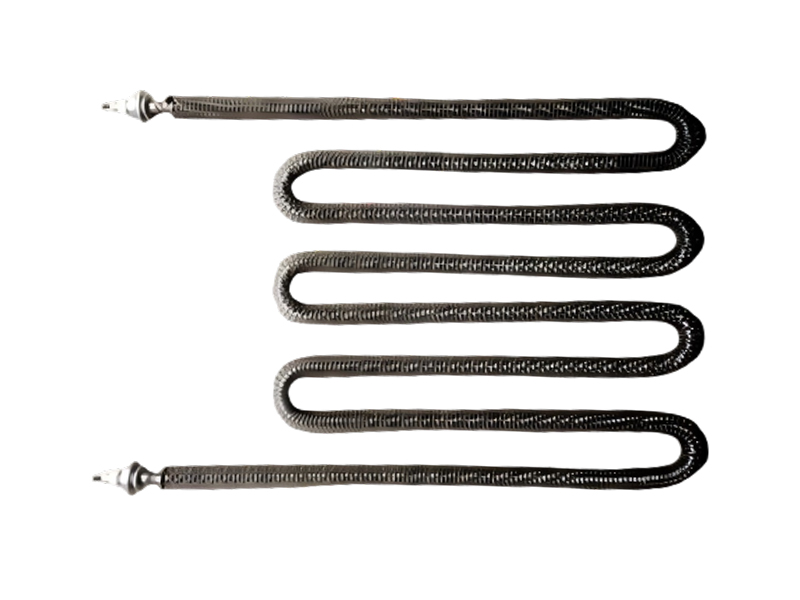
Finned electric heating tubes, as the name suggests, are designed with fins wrapped around the outer surface of the heating tube to enhance heat dissipation, thereby saving space and improving efficiency.
For finned electric heating tubes, please provide the following parameters:
Voltage and power.
Tube diameter, material, and the diameter after fin attachment; fin material requirements (tube materials available: 10# carbon steel, SUS304, SUS321, SUS316L, SUS310S (commonly known as 2520), titanium tube, etc.).
Tube length and specific dimensions; for complex shapes, please provide drawings.
Whether mounting fasteners are required, and their size and specifications.
Installation environment and operating temperature control range.
Selection of finned electric heating tubes:
Material quality is a critical factor affecting the quality of finned electric heating tubes.
Reason: Proper selection of raw materials is the prerequisite for ensuring product quality.
Tube material selection principles: high-temperature resistance and corrosion resistance.
Resistance wire selection: nickel-chromium alloy wire.
Magnesium oxide powder selection: industrial-grade magnesium oxide powder.
Sealing material selection: silicone oil + 704 sealant.
Fin materials available: stainless steel, carbon steel, galvanized steel, aluminum (stainless steel is preferred).
Applications of finned electric heating tubes:
Used in the chemical industry for heating chemical materials, drying powders under certain pressures, chemical processes, and spray drying.
Heating of hydrocarbons, including crude petroleum, heavy oil, fuel oil, heat transfer oil, lubricating oil, and paraffin.
Heating of process water, superheated steam, molten salt, nitrogen (air), water gas, and other fluids requiring temperature rise.
With advanced explosion-proof construction, they are widely used in hazardous areas such as chemical plants, military applications, petroleum, natural gas, offshore platforms, ships, and mining sites.
Finned electric heating tubes are also extensively used in machinery manufacturing, automotive, textile, food, and home appliance industries, especially in air curtain systems for air conditioners. They are particularly effective for heating petroleum and fuel oil, and find broad applications in both industrial and chemical sectors.




 Home
Home
